Invasive Species Removal: A Seasonal Guide for Woodland Edges
A field spills into woods, and that seam — the first ten or fifteen metres where light still reaches the ground — is where most invasive shrubs get their start. Seeds arrive on bird droppings, on wind, on mower decks. They land in exactly the conditions they like: disturbed soil, generous light, and little competition from a closed canopy. The same qualities that make an edge vulnerable also make it workable. You can reach it, see what you are doing, and step back out without trampling the forest floor.
What separates a satisfying afternoon of cutting from three years of whack-a-mole is timing. Cut a shrub at the wrong moment and it answers with five stems where there used to be one. Cut it at the right moment, with the right tool, and it stays down.
Why Edges Invite Trouble
An edge is a transition zone: more sun, warmer soil, more wind, more seed drifting in from the open ground. Native shrubs and small trees belong here too — serviceberry, red-osier dogwood, hazelnut, nannyberry, chokeberry, wild plum. That is a good reason to slow down with the saw. Some of what looks scruffy and unremarkable is precisely the thicket you are trying to encourage.
Edges also collect disturbance. They get mowed, dumped on, walked through, and driven over. Disturbance is an invitation. So the goal is not bare ground or a tidy line. It is fewer invasive seed sources, and more room for the native woody plants and ground layer to close in behind them.
Know Your Targets Before You Cut
Learn six shrubs well and you will cover most of what you meet east of the Rockies and in many mild-winter regions besides.
- Bush honeysuckles (Amur, Morrow's, Tartarian). First to leaf out in spring, last to drop in autumn — often the only green in the understory. Stems are hollow or packed with brown pith. Paired red or orange berries in late summer.
- Common and glossy buckthorn. Early leaf-out, late leaf-drop, small black berries that stain your fingers. Twigs often end in a short thorn-like tip, and scraping the outer bark of common buckthorn reveals orange-yellow inner tissue.
- Multiflora rose. Arching green canes armed with stout, curved thorns, fringed stipules where the leaf joins the stem, white flowers in late spring, clusters of small red hips in autumn.
- Autumn and Russian olive. Silvery, scaled leaves with pale undersides. Autumn olive carries speckled red berries; Russian olive has dry, mealy yellow fruit. Both fix nitrogen and resprout hard from a cut stem.
- Japanese barberry. Dense, low, prickly thickets with small spoon-shaped leaves and a single sharp spine at each node. Red berries hang on through winter. These thickets are frequently associated with tick habitat, so dress accordingly.
- Privet and winged euonymus. Privet is often half-evergreen, with opposite leaves and small black berries; cut stems smell strongly. Winged euonymus has corky ridges running along green stems and turns brilliant red in autumn.
Leave the natives standing. Viburnums hold opposite leaves and blue-black berries; dogwoods have opposite leaves and often red stems with white pith; spicebush leaves smell of citrus when crushed; elderberry has soft, spongy stems. If you cannot decide, tie a strip of flagging tape on the stem in summer and come back when it is flowering or fruiting.
A Season-by-Season Calendar
Two rules shape the whole year. Late summer and autumn are when woody plants move sugars down into their roots, so that is when a cut-stump treatment travels furthest. And late autumn through winter is when the natives are asleep, which means you can work without stepping on the plants you are protecting.
Late autumn into early winter (October–December)
The best window for most cutting work. Natives are dormant, invasive shrubs still hold leaves and are easy to spot, and soil is usually workable. Stump treatments applied now are carried down into the roots. Bag any berry-laden stems and take them off site rather than dropping them where birds can spread the seed.
Winter (January–March)
Frozen ground is poor for pulling but excellent for felling, dragging brush, and burning where local rules allow. Visibility is at its best and there is nothing to trample. Choose mild days rather than deep cold, and keep your cutting tools sharp — cold wood is unforgiving.
Spring (April–June)
Peak season for wildflowers and nesting birds. Hold off on heavy cutting. Use the time to hand-pull first-year seedlings while the soil is moist and to confirm identifications from flowers and new leaves. If you must fell something, check the shrub for nests first, and work outside the early morning hours when birds are most active around them.
Summer (July–August)
Hot, tick-heavy, and best spent on follow-up. Repeated top-cutting of multiflora rose and barberry during the growing season drains root reserves. Rain-softened soil makes pulling easier than any other time of year. If a stem is too big to pull and too risky to treat in the heat, flag it and wait for October.
Tools and Techniques That Fit the Job
A modest kit covers nearly everything: bypass loppers, a folding pruning saw, thorn-proof gloves, eye protection, a mattock or grub hoe, a weed wrench for stubborn stems, a sponge-tip applicator, flagging tape, a tarp, and a sharpening file.
Hand-pulling
For seedlings and first-year stems. Grasp as low as you can, close to the soil, and pull steadily rather than yanking. Work when the ground is damp. A weed wrench gives you leverage on stems up to a couple of inches across and lifts much of the root crown with it.
Cut-stump treatment
The workhorse for honeysuckle, buckthorn, privet, barberry, and autumn olive. Cut the stem two to four inches above the ground and level enough that the surface holds a drop. Apply an appropriate herbicide to the fresh cut surface — especially the outer ring just inside the bark — within minutes of cutting, when the tissue is still open. That timing matters more than the volume used. Follow the product label exactly, and check local rules before treating near water or in a wetland; some areas restrict certain products. If you are unsure, ask your regional extension service or land trust for guidance on what is permitted where you live.
Girdling
Useful where herbicide is not an option and the stem is large enough to work with a saw. Cut two parallel rings through the bark and the living layer beneath, removing the strip between them. It kills slowly, over a season or more, so mark the stem and check it the following year.
Repeated top-cutting
Cut resprouting shrubs at or near ground level several times through the growing season, for two or three years. Each cut spends root reserves the plant cannot replace. This is the practical choice for multiflora rose and for barberry in areas where you would rather not use chemicals at all.
Protecting Natives While You Work
Most damage at an edge comes from feet, not saws. Work on frozen or dry ground when you can, because wet soil compacts and stays compacted. Lay cut brush on a tarp or a sheet of plywood while you work, and walk the same few paths instead of wandering. Do not broadcast anything; treat stumps individually and never touch a stump you have not identified. Leave deadwood, leaf litter, and the duff layer alone — that is next year's habitat. And haul out the stems of species that can root from cuttings lying on damp ground, such as willow and privet, or pile them somewhere sunny and off the soil so they dry out completely.
After the Cut: Monitoring and Retreatment
Expect a flush. When light reaches the ground again, seeds that have been sitting in the soil for years — the berry crop of past seasons — will germinate. Pull or mow that flush before it sets seed. This is the year that decides whether you have solved a problem or just opened a door.
Walk the same line a few weeks after your first pass, then twice a season for the first two years. New honeysuckle and buckthorn shoots pull easily while they are small. By the third year, the pressure usually drops enough that maintenance is a short stroll with loppers rather than a day's work.
Start Small, Keep Notes
Pick one stretch of edge — ten or fifteen metres, no more — and finish it before moving on. Note the species you cut, the date, the method, and what came back. That record is what turns a chore into a plan, and it will tell you more about your own ground than any general guide can. Aim for a messy, layered, native edge rather than a clean one. The birds, the insects, and the woodland floor behind it will do the rest.
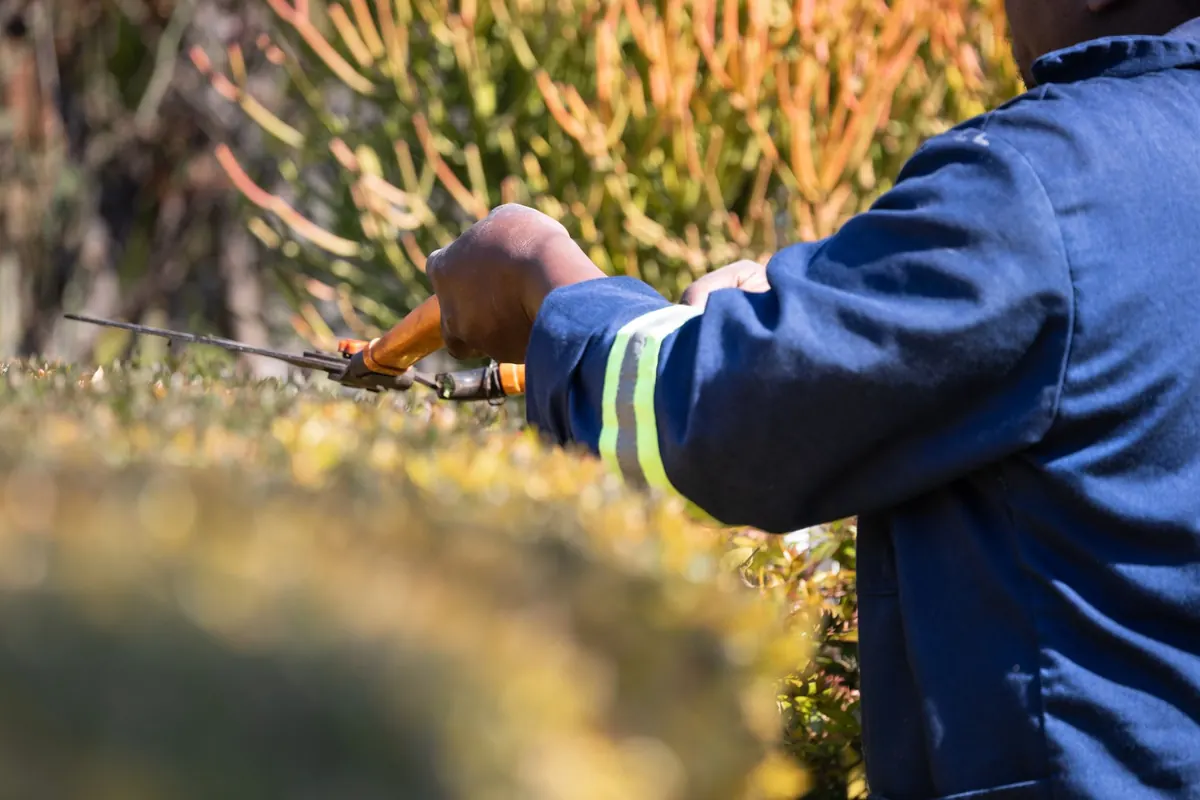
Photo: Magda Ehlers / Pexels